
The story
Meet Stephen
Thank you so much for joining me on this journey - it’s an incredible feeling to know that there are others out there who share the same appreciation for my one-of-a-kind pieces as much as I do.
Thank you so much for joining me on this journey - it’s an incredible feeling to know that there are others out there who share the same appreciation for my one-of-a-kind pieces as much as I do.
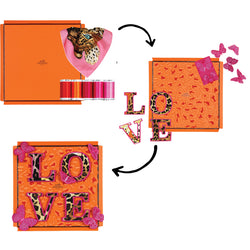
Some of Stephen’s favorite pieces use unique up-cycling techniques, transforming materials often seen as disposable into works of art. Each piece begins with an up-cycled luxury bag, box, silk scarf, or handbag. He then hand-digitizes a custom embroidery design, layering each stitch individually. The bags and boxes are deconstructed to become the canvas, allowing the embroidery to bring the texture and character of each piece to life.
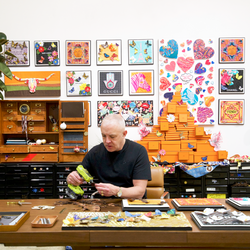
Most visitors are surprised by Stephen’s studio, expecting a traditional artist’s space with paints, easels, and art supplies. Instead, the 15,000-square-foot studio combines traditional techniques with modern technology. Stephen works with 3D printers, laser cutters, large-format embroidery machines, yarn embroidery machines, and laser-cutting embroidery machines. Seeing the craftsmanship and many steps involved in each piece often leaves visitors surprised and impressed.
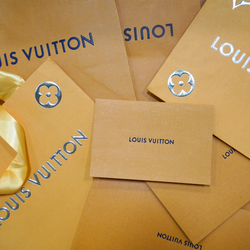
The most common question Stephen gets is, “Where do you find all these boxes?” Luxury brand products come in beautifully crafted packaging, often discarded or stored away. Stephen repurposes these materials into art, carefully selecting each box or bag from sources worldwide—donations from clients and friends, auctions, estate sales, and more. All fabrics used are also luxury items, like scarves, clothing, or packaging. He spends time daily sourcing these unique materials for his work.
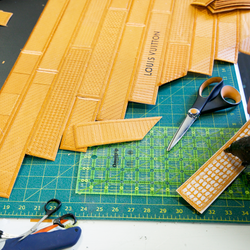
Some pieces are created from a single box, while others combine multiple boxes cut and collaged into patterns inspired by vintage quilts. With years of experience in the quilting industry, Stephen uses these designs to pay homage to the quilts he has created. The boxes are cut, assembled with adhesive, and prepared as a canvas before being scanned and digitally edited to precisely match the piece.
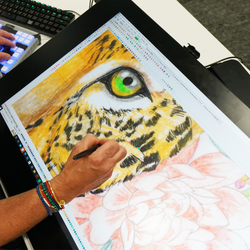
Stephen brings the image of choice into his digital drafting system and hand traces all of the stitches using the image of the canvas as his guide. He masterfully engineers the stitches allowing beautiful patterns and designs to emerge as a decorative background for the final piece. Most of the small works have over 50,000 stitches while the large pieces can easily require 1,000,000 stitches or more.
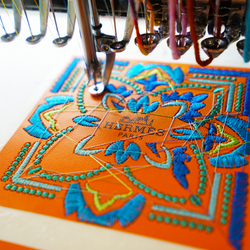
The studio houses over 30 types of embroidery machines, including standard, laser-cutting, and yarn embroidery models. For each piece, a suitable machine is selected and prepped with thread and fabric. The thread is loaded, and the canvas is carefully secured with backing. Stitching can take up to 16 hours, depending on the design’s complexity. During this stage, appliqué fabrics and decorative elements like butterflies, flowers, and patches are also added.
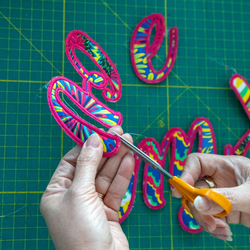
Once the pieces come off of the the embroidery machine it is moved into finishing and meticulously hand trimmed. Each butterfly and embroidered element is hand trimmed with skill, patience and a very sharp pair of scissors. Each pom-pom is perfectly hand rolled using remnants of luxury scarves, ensuring every part of the luxury materials are used and not wasted. Every piece is full of amazing intricate detail.
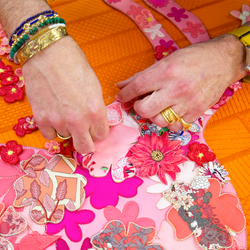
The final step in the process is decorating which entails mounting the butterflies, appliqués and other decorative objects to the piece. Each butterfly is mounted using industrial adhesive and molded into different wing angles to simulate flight. Stephen’s goal is that the butterflies look as though they landed right onto the piece of art. The appliqué elements are each mounted on top of laser cut acrylic to give a 3D effect, making them appear to pop off of the canvas

Every aspent of our pieces are created in our North Carolina studio by a group of skilled artisans


